
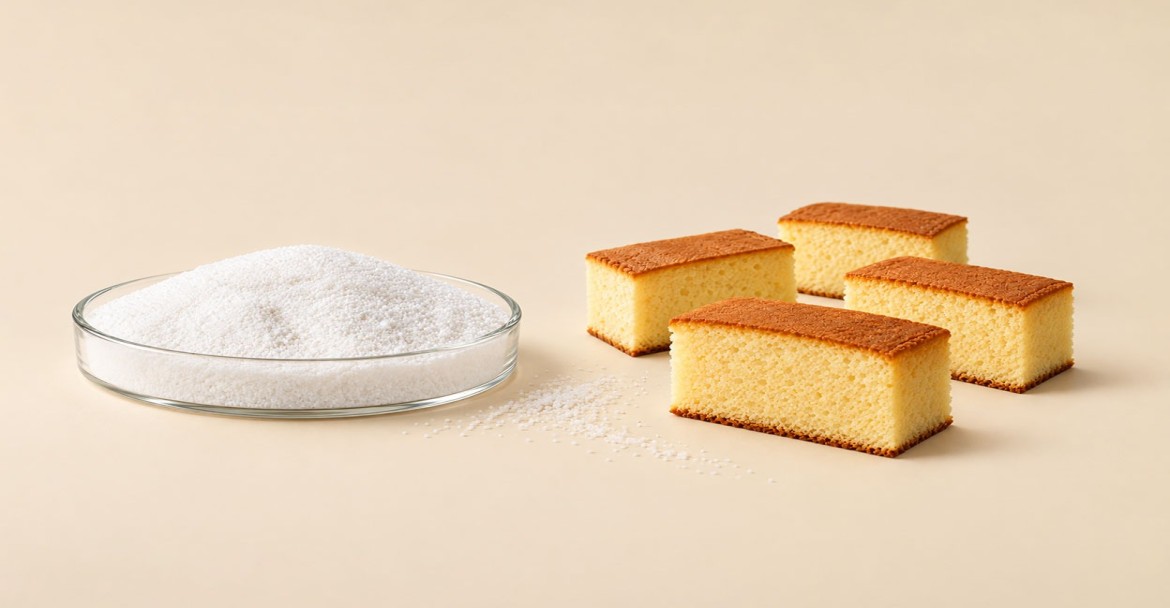
Ask any baker what separates a mediocre cake from an exceptional one, and they'll likely mention crumb structure. It's not just about flavor. It's about that light, airy texture that melts on your tongue. Getting there requires more than the basic trio of flour, sugar, and eggs. You need the right science working behind the scenes, and that's where Polyglycerol Esters come in. PGE is one of those ingredients that doesn't get much attention from consumers, but manufacturers know it's absolutely essential for producing cakes that stay fluffy and maintain their texture bite after bite.
Why Air Matters in Your Cake
Think about what happens when you whip a cake batter. The mixer is doing two things at once: blending ingredients and incorporating air. Those tiny bubbles dispersed throughout the batter? They are the foundation of everything that follows. When the cake hits the oven, those air pockets expand with heat, and that's what gives you that cloud-like crumb structure people crave.
Skip this step or get it wrong, and you are looking at a dense, heavy cake that sits like a brick. But there's a catch: keeping those air bubbles stable during mixing and baking is trickier than it sounds. Oil and water don't naturally get along, which means your emulsion breaks down easily and bubbles start collapsing. That's where Polyglycerol Esters step in. PGE acts as a kind of peacemaker, holding together the fat and water phases while protecting those precious air cells you've worked to create.
How Polyglycerol Esters Enhance Bubble Stability
Here's the clever bit: Polyglycerol Esters have what scientists call "amphiphilic" properties. In simpler terms, these molecules work as bridges. One end has fat-loving properties while the other has water-loving properties. This dual nature is super helpful when you are trying to keep a stable emulsion.
During mixing, PGE molecules naturally cluster around the air bubble interface. They basically create a protective barrier. Think of it like a tiny shield around each bubble. This barrier does something important: it stops smaller bubbles from merging into bigger ones. Without this protection, your carefully whipped batter starts losing all that airiness as bubbles collapse and combine. With PGE working its magic, you get something much better: consistent, finely distributed bubbles of similar size throughout the batter.
What You Actually Get: Better Volume and Texture
Put PGE to work in your formulation, and the results show up immediately. You get noticeably higher cake rise. The kind that looks impressive when you open the oven door. That's because the batter goes into the oven holding onto all that air you've incorporated, and PGE keeps it there. During baking, instead of bubbles collapsing and merging, they expand evenly. The result is a cake with real height and presence.
But volume's only part of the story. Look at the crumb itself under magnification, and you'll see something different compared to cakes made without PGE. The cell structure is finer and more consistent. It's the difference between a uniform, velvety crumb and one that looks a bit chaotic. That consistency matters more than people realize. It changes how the cake feels in your mouth, how it slices, and honestly, how fresh it tastes even days after baking.
Working PGE Into Your Recipe
One of the best things about Polyglycerol Esters is their flexibility. They work in sponge cakes, pound cakes, and layer cakes. Most manufacturers use PGE at somewhere between 0.3% and 0.8% of the flour weight. This range gives them room to dial in exactly the effect they want on the cake being baked.
And here's something manufacturers really appreciate: PGE doesn't bail on you when things get hot. It holds up perfectly fine through mixing, baking, and cooling. This thermal stability means it keeps doing its job even as the batter transforms from liquid to solid. There’s no need to worry about the emulsifier breaking down halfway through the bake.
PGE Plays Well With Others
PGE definitely stands on its own as an emulsifier, but it gets even better when you pair it with the right supporting ingredients. Combine it with baking powder or baking soda, and there are noticeably bigger volume gains. It also meshes nicely with hydrocolloids and other functional ingredients. The kind of combination that lets bakers build outstanding structures without cranking up mixing times or needing industrial-grade equipment.
Why Manufacturers Love PGE
From a practical manufacturing standpoint, PGE is a game-changer as it offers more flexibility in the mixing protocols. There is no need to hit some perfect, narrow window of mixing speed and time. The batter is more forgiving, which matters a lot when scaling up production across different equipment or facilities. This consistency reduces waste and variability in the finished product.
There's also a shelf-life benefit that catches people off guard. Cakes made with PGE actually stay fresher longer. The improved crumb structure holds up better against staling, so the product stays soft and appealing through the entire shelf period. For retailers and consumers, that's a big win.
The Bottom Line
Polyglycerol Esters don't get the spotlight, but they are doing some seriously important work in modern cake production. They lock in aeration, improve structure, and keep cakes fresher longer. Whether you are running a large manufacturing facility or working on specialty formulations, PGE delivers results you can actually see and taste. If you are serious about improving your cake game, it's definitely worth exploring what this emulsifier can do for your product.