
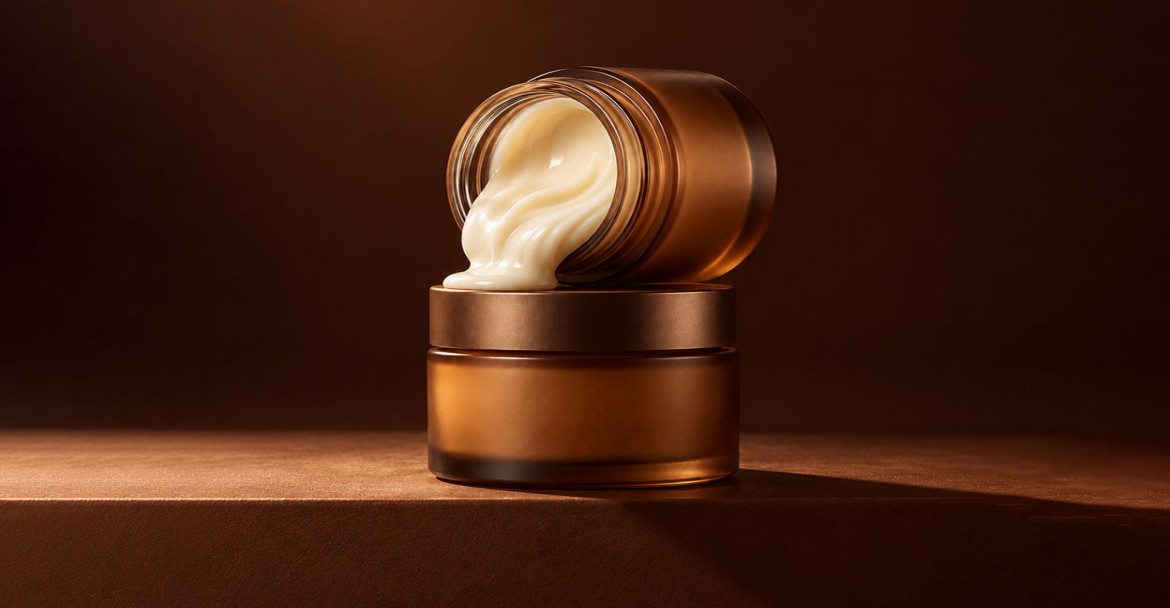
Cetyl Palmitate is one of those quiet ingredients that decides whether a lipstick holds its shape, a cream feels rich instead of greasy, or a wax blend sets the way a production line expects. This vegetable-origin wax ester turns up across colour cosmetics, skincare and hair care, and just as readily in candles, textile finishes and lubricant blends.
The reason is the same in every case. Oily formulas slump without a structuring wax. Cetyl Palmitate is among the most dependable waxes available to formulators. What it fixes is easier to appreciate once you know what goes wrong without it
Why Cetyl Palmitate Earns a Place in a Formulation
The answer starts with what oils cannot do. Oils soften, lubricate and spread, and they do all three well. What oils cannot do is hold a shape. That is why products such as lipsticks, lip balms, and deodorant sticks can lose their shape during filling or slump in a warm warehouse, while creams can lose body or become less stable during storage.
There is also a trade-off in how a product feels. Formulas that rely heavily on liquid oils for richness can feel greasy on the skin, while adding too much hard wax can make a product drag during application. Getting the balance right means adding enough structure without making the finished product unnecessarily heavy or difficult to use.
Technical manufacturing faces the mirror image of the same problem. A wax blend that is too soft loses shape retention and burn consistency, while a blend that is too hard demands more heat and longer cooling cycles on every batch. What manufacturers want, in both worlds, is firmness without weight.
Cetyl Palmitate: The Wax Ester That Adds Structure
So what is this material, and how does one wax ester manage all three jobs at once? Let’s take a look at it.
A Plant-Derived Wax With Predictable Behaviour
Cetyl Palmitate is a vegetable-derived wax ester supplied as white flakes that readily melt into the oil phase. Its value comes during cooling, when the wax sets throughout the formulation to add body, structure, and firmness, helping creams gain consistency and lipsticks, lip balms, etc. maintain their shape without making the product feel excessively heavy or greasy. Also, this white flaky material provides a practical way to improve the form of lipsticks, lip balms, and deodorants without simply increasing the oil or harder wax content.
Sticks That Hold Their Shape
A lipstick, lip balm or deodorant stick has to survive a mould, a filling line, a shipping container and months on a shelf. Cetyl Palmitate works as a bodying agent on every one of those counts, firming the stick so the product resists slumping, releases cleanly from the mould, and holds a smooth surface rather than sweating oil.
On a lipstick, that same wax network decides how much colour lifts off with each pass, meaning how much of the product transfers with each stroke. A lipstick that's too soft smears. One that's too hard drags. Replacing part of the liquid oil with a solid ester also leaves the finish cleaner rather than heavier.
Creams and Lotions That Feel Rich, Not Heavy
In creams and lotions, this wax ester acts as an emollient and skin conditioning agent, leaving a smooth finish rather than a greasy one. The wax also reinforces the oil phase, supporting Sorbitan Monolaurate in maintaining emulsion stability through storage and transport, exactly where separation problems tend to surface.
There's a visible difference as well. A cream made with Cetyl Palmitate looks denser and creamier than one without. The fine wax crystals scatter light, so the material doubles as an opacifier and gives creams the milky look consumers associate with a rich product. The same principle of controlled crystallisation produces the pearlescent finish of EGMS in shampoo formulations.
Smoother Hair With Less Friction
Hair care draws on a different property of the same material. This fatty alcohol ester repels water and stays on the hair surface as a thin film rather than washing straight off, smoothing the hair fibre and reducing friction between strands, making hair easier to comb and manage.
The way it is combined with other ingredients such as emulsifying waxes and Cetyl Stearate depends on the structure, texture, and performance required from the final product. These same functional properties also make Cetyl Palmitate useful beyond cosmetic formulations, including several industrial and technical applications.
Cetyl Palmitate in Industrial and Technical Applications
When a formulation needs more form, smoother movement, or improved surface properties, Cetyl Palmitate can help. It melts during processing and sets as the product cools, making it suitable for a range of industrial applications.
Where This Material Adds Value
- Candles and Wax Blends: Beyond hardness and shape retention, this white flaky material makes a wax blend easier to work with and more even in the melt.
- Lubricants and Slip Agents: The waxy structure of Cetyl Palmitate can contribute to smoother movement between surfaces in lubricant formulations, assisting in minimising friction and facilitating movement.
- Textile Finishing: Coats the fabric with a light wax layer that will soften and smooth out the feel of the fabric, but won't make it as heavy as needed.
- Polishes and Coatings: Provides a smooth surface, moisture resistance and glaze, thus giving more durability and functionality to the finished product.
- Pharmaceutical Lipid Systems: Can function as a structured solid lipid in pharmaceutical formulations that require controlled release and stability to lipids.
The material does not change from one industry to the next. What changes is the problem put in front of it: shape and feel in a cream, friction and wear in a machine. A cosmetic chemist wants a clean finish; a lubricant blender wants less friction between moving parts. The wax successfully supplies both.
Wrapping Up
Cetyl Palmitate solves a problem most structuring materials cannot. It adds firmness without adding weight, so a formulation gains shape without losing the feel it needs.
That balance between firmness and weight is what carries the material across such different products. Lipsticks, creams and conditioners draw on it for body and feel. Candle blends, coatings and finishes draw on it for hardness and slip. For anyone looking for a vegetable-derived wax ester that does both, Cetyl Palmitate from Spell Organics is a practical place to start.