
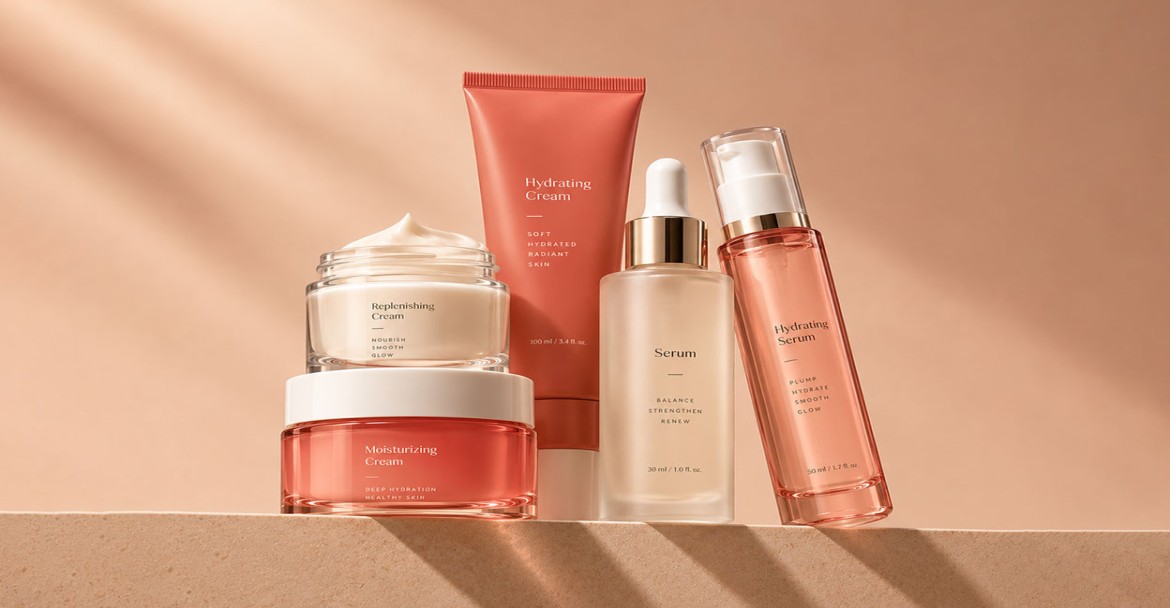
Open any bottle of cream or lotion that has been sitting on a shelf for a few months, and you can usually tell within seconds whether the formulation was built to last. A stable product still looks and feels the way it did on day one. An unstable one shows signs of trouble, maybe a thin layer of liquid separating at the top, or a texture that feels slightly different from what you remember. Cosmetic chemists spend a surprising amount of their time trying to prevent exactly this kind of quiet failure, and Sorbitan Monolaurate is one of the emulsifiers that helps them get there.
Two Challenges Every Cosmetic Formulation Must Overcome
Behind the making of every cream, lotion, and serum are two formulation challenges. One is achieving proper ingredient incorporation during mixing. The other is ensuring the finished product remains stable over time. A formulation can succeed during manufacturing but still develop separation or texture changes months later. Sorbitan Monolaurate helps address both of these challenges.
Where Wetting Comes Into the Picture
Wetting is the term chemists use to describe how easily a liquid spreads across a solid surface instead of resisting it. Picture dropping water onto a waxy leaf versus dropping it onto a paper towel. One beads up, and the other spreads and soaks in. Inside a cosmetic formulation, powders, pigments, and certain actives behave a lot like that waxy leaf if left untreated, resisting the surrounding liquid rather than blending into it smoothly.
How Sorbitan Monolaurate Bridges the Gap
Sorbitan Monolaurate is created through the esterification of sorbitol with commercial coconut fatty acid, and this process gives the resulting molecule a structure with two very different personalities in one. One end of the molecule is drawn to water, while the other end is drawn to fats and oils. This split personality is exactly what allows it to act as a bridge, coaxing stubborn particles into the surrounding liquid rather than letting them sit apart from it.
From the Mixing Bowl to the Shelf
Once the ingredients have been properly wetted and dispersed during mixing, the focus shifts to maintaining that uniformity throughout the product's shelf life. This is where formulation stability becomes critical. Even a well-formulated cream can gradually develop signs of instability over time, such as phase separation, changes in texture, or uneven colour distribution in tinted products. By promoting more effective wetting and ingredient dispersion during formulation, Sorbitan Monolaurate helps create a more homogeneous system, reducing the likelihood of separation or settling during storage.
Why This Matters More in Certain Product Types
Not every cosmetic formulation carries the same risk of instability. Products containing fine powders, pigments, or oil soluble actives are generally more vulnerable to separation and settling than simpler, single-phase liquids. Tinted moisturizers, colored creams, and certain sunscreen formulations fall into this higher risk category, which is exactly why Sorbitan Monolaurate tends to show up more often in these kinds of products than in a plain, clear gel.
A Quiet Ingredient With a Visible Impact
What makes Sorbitan Monolaurate interesting is how little credit it usually gets for the difference it makes. Consumers never see it listed prominently on packaging the way they might notice a trending active ingredient. Yet its presence often determines whether a product still looks and performs the same way after sitting in a bathroom cabinet for half a year, which is arguably a more meaningful measure of quality than how impressive a formulation looks on the first day.
Bringing It All Together
Formulating a cosmetic product that performs consistently over time requires more than picking effective active ingredients. It requires making sure everything in the formula stays exactly where it is supposed to be, from the moment of mixing through months of storage. Sorbitan Monolaurate supports this by handling two closely connected jobs at once, helping particles wet properly during formulation and helping the finished product resist the slow drift toward instability that so often shows up only after time has passed. For formulators aiming to build products that hold up long after they leave the factory, it remains a dependable and quietly essential choice.